
What Future-Ready Businesses Do Differently


Make Resilience a Competitive Advantage

No 4 in Series: Focus on Forward—Navigating Disruption in APAC
In Part 3 of our ‘Focus on Forward’ series, we explored how to build resilience through a phased technology roadmap. In Part 4, we look at what happens once those foundations are in place and see how future-ready businesses turn resilience into a true competitive advantage.
Disruption isn't going anywhere. That’s the sobering reality for business leaders across the Asia Pacific.
The organisations thriving in this environment aren’t the ones waiting for stability to return. They’re the ones who have stopped letting disruption stall their progress and chosen to work differently.
Instead of trying to predict what’s coming next, future-ready businesses focus on building the capability to respond. In doing so, they’ve turned resilience from a defensive strategy into a competitive advantage.
The Mindset Shift That Changes Everything
The difference between reactive and responsive businesses has nothing to do with resources, market position, or even industry. It's all about mindset.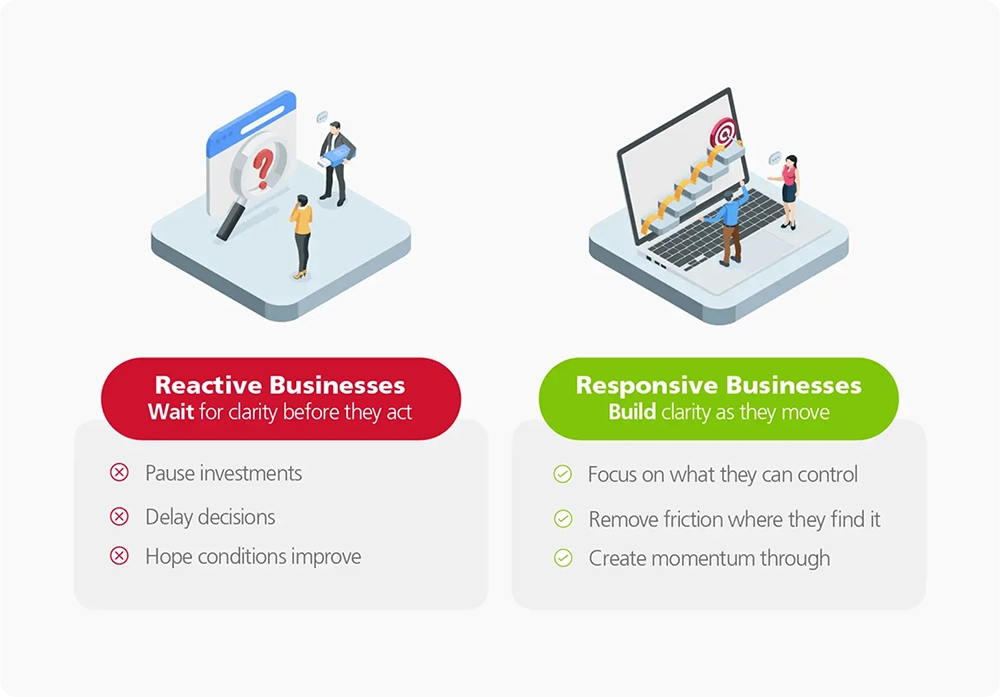
This shift from delay and caution to building clarity isn't just philosophical. It’s a real, concerted choice to break away from stasis, which then delivers measurable results that compound over time.

The Outcome That Matters: Why Resilience Creates Competitive Advantage
When businesses build true resilience, the results show up in three critical areas that directly impact their ability to compete and grow.
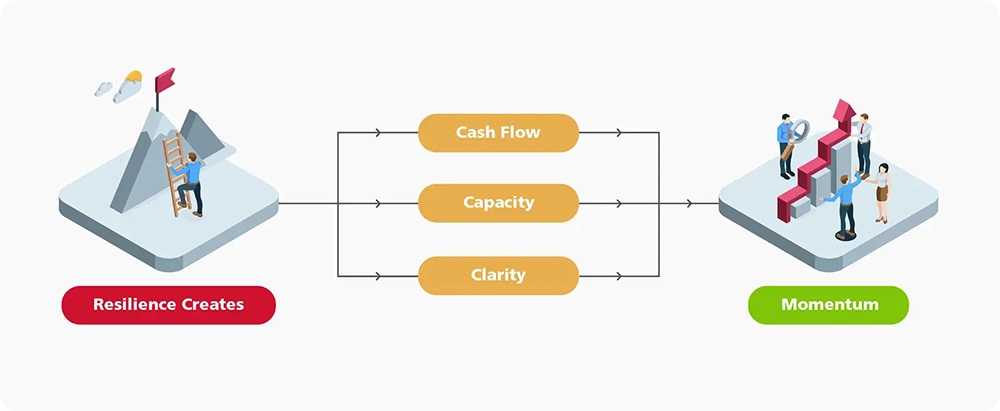
Smoother Cash Flow: Make and Receive Payments Faster
Resilient businesses transform their financial operations from reactive to proactive. Instead of chasing invoices manually, they've automated accounts payable and receivable workflows and implemented real-time dashboards to get accurate working capital status.
As a result, cash flow becomes predictable rather than reactive, and these organisations have the financial flexibility to invest in opportunities instead of just managing cash flow crises.
Greater Capacity: Reduce Admin Load and Improve Focus on Valu
One of the clearest indicators of a resilient business is how its people spend their time. While stretched organisations have teams constantly managing fires and drowning in administrative tasks, responsive ones have systematically eliminated operational drag.
Through digitised approvals and workflows, automated routine processes, and standardised approaches that scale, they free up human capacity for strategic work that drives competitive advantage.
Better Clarity: Decisions Made with Confidence, Not Guesswork
Visibility is an issue that resilient organisations continue to evolve. They've moved beyond fragmented data silos and inconsistent reporting to create real-time operational insights.
These businesses use traceable approvals, centralised document access, and KPI dashboards to help leaders spot issues early. This allows them to respond with data-driven confidence when disruption hits.
The Result: Resilience Builds Momentum, Momentum Builds Growth

When resilience delivers smoother cash flow, greater capacity, and clearer visibility, the effect is cumulative. Each of these strengths reinforces the others, creating the space and confidence to move faster.
Momentum is the outcome. Instead of progress stalling under pressure, businesses build a rhythm of improvement.
The Growing Gap: Reactive vs. Responsive
While 79% of midsize businesses reported increased costs in 2024, with over half citing labour as a top challenge, the organisations that maintained growth weren't necessarily those that avoided these pressures—they were those that built operational foundations strong enough to absorb them.
This shift can be seen across sectors throughout APAC, where the common thread is how all these organisations have built capabilities that can fundamentally work under pressure.
- Manufacturing companies digitised their documentation and logistics workflows, enabling tighter cost control and faster response times, even as tariffs and trade complexity increased.
- Healthcare and professional services firms implemented document management platforms and automated workflows that maintained compliance while improving operational flexibility.
- Logistics operators centralised dashboards and secured their IT infrastructure, maintaining critical system uptime and gaining visibility advantages, despite delivery pressures intensifying.
Why Traditional Approaches Fall Short
Overhauling digital capabilities from the ground up all at once, isn’t possible anymore. Traditional approaches, usually grandiose digital transformation strategies, assume stable conditions for implementation. These, however, are misaligned with the realities of the current, constantly disruptive climate where these efforts could be wasted and cause even more issues.
Resilient businesses have learned to work differently as a result. They start with friction removal rather than complete overhauls. Then, once their foundations are stable, they build momentum through practical wins that free up resources for efficiency. It’s a step-by-step method that focuses on solving the easiest issues first before moving on to bigger problems.
Conclusion: Reclaiming the Ability to Lead
Building resilience isn't just about surviving. It's about reclaiming your ability to lead the market, rather than reacting to its changes.
When you have resilience built into your business, you can invest in opportunities, pivot quickly, and make strategic decisions—while others struggle to find their footing.
That is what competitive advantage looks like in an environment of constant change. It isn’t the ability to predict what's coming, but the capability to respond effectively when it arrives.
In our eBook, Focus on Forward: A Guide to Navigating Disruption, we provide detailed frameworks, real-world examples, and practical steps for organisational resilience that turn disruption into competitive advantage. Discover where your quick wins are hiding and how to turn them into lasting operational strength, so you can focus on what truly drives growth.
ebook:
Focus on Forward – A Guide to Navigating Disruption
Explore how businesses across APAC are turning pressure into progress with clear, focused action.
Download the full ebook here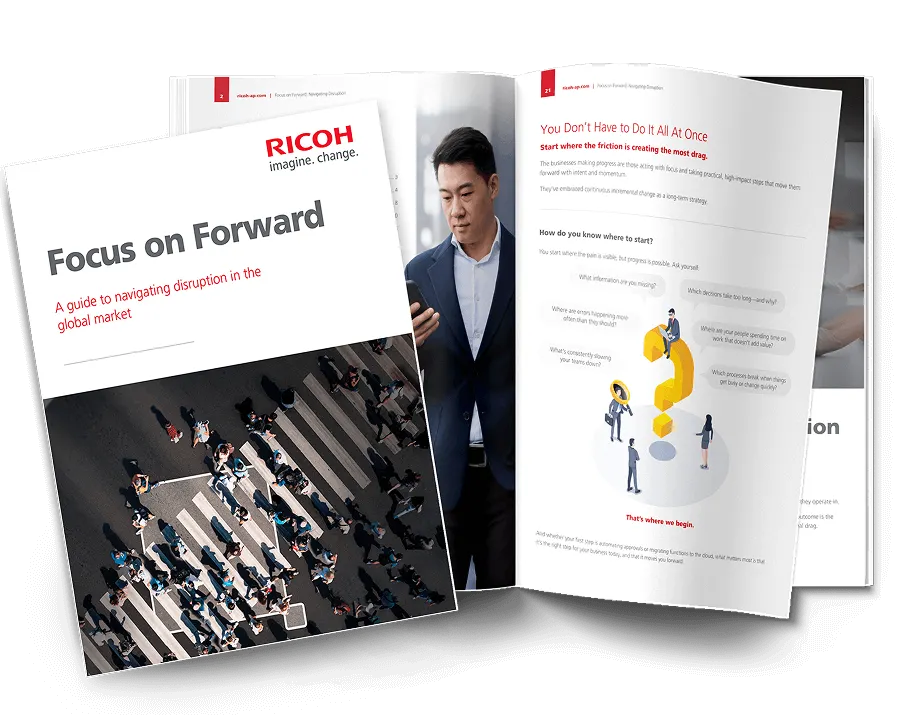
ebook:
Focus on Forward – A Guide to Navigating Disruption
Explore how businesses across APAC are turning pressure into progress with clear, focused action.
Download the full ebook here